Essential Cultural Etiquette Tips for Visiting Japan
Japan is a country where tradition and modernity coexist in a carefully balanced manner. For many visitors, understanding local customs can significantly shape the quality of their stay. While no one expects foreigners to master every nuance, a respectful effort to follow basic social conventions is often appreciated and helps build positive interactions. The following sections outline some of the most commonly encountered situations where cultural awareness can make a difference.
Cultural etiquette in Japan is not merely about following rules; it reflects broader values such as harmony, respect for hierarchy, and consideration for others. These principles influence everyday actions ranging from how people greet one another to how they exchange gifts or share a meal. By familiarising oneself with these practices, travellers can navigate social situations with greater confidence and avoid unintentional misunderstandings.
It is worth noting that etiquette norms can vary depending on the region, the occasion, and the relationship between individuals. This guide provides a general overview based on commonly observed practices across Japan. Readers are encouraged to remain observant and adapt to the specific context they encounter during their travels.
Greetings and the Practice of Bowing
Bowing is perhaps the most visible aspect of Japanese social interaction. It serves as a greeting, a farewell, an expression of gratitude, and a gesture of apology. Unlike a handshake, bowing eliminates direct physical contact and conveys respect through the angle and duration of the bow. A slight bow of about 15 degrees is appropriate for casual exchanges, while a deeper bow of 30 to 45 degrees is used in more formal settings or when showing sincere appreciation.
When meeting someone for the first time, it is common to combine a bow with a verbal greeting such as “Hajimemashite” (nice to meet you). Foreign visitors are not expected to bow with perfect precision, but a simple nod or a small bow in return is considered polite. In business contexts, a handshake may be offered, especially with international counterparts, but it is often accompanied by a slight bow. Eye contact during a bow is generally avoided to convey humility, though maintaining a brief, soft gaze at the start is acceptable.
Timing and reciprocity are also important. If someone bows to you, it is customary to bow back at roughly the same depth. Ignoring a bow or responding with an excessively shallow bow can be perceived as dismissive. Observing how locals bow in different situations can provide useful cues for adjusting one’s own behaviour.
Gift-Giving Customs and the Spirit of Omotenashi
Gift-giving in Japan is a nuanced practice rooted in the concept of omotenashi, which emphasises thoughtful hospitality. Gifts are often presented on occasions such as visits to someone’s home, returning from a trip, or expressing gratitude. The value of the gift is less important than the intention behind it and the manner in which it is offered. Wrapping is highly symbolic; gifts are typically wrapped in a cloth or decorative paper, and the wrapping itself is part of the gesture.
When receiving a gift, it is conventional to accept it with both hands and to express appreciation without immediately opening it in front of the giver. Opening the gift later in private shows that the focus is on the relationship rather than the item. Similarly, when offering a gift, using both hands to present it is a sign of respect. Gifts that come in pairs, such as two of the same item, are often favoured because they symbolise good fortune, whereas sets of four or nine are generally avoided due to associations with death and suffering in Japanese numerology.
For visitors, bringing a small souvenir from one’s home region is a common way to express gratitude. It is not necessary to spend a large amount; a locally produced snack or a distinctive craft item is often well received. The act of giving, along with the accompanying phrases such as “Tsumaranai mono desu ga” (This is a trivial thing, but…), is part of the etiquette. Even if the phrase seems self-deprecating, it is understood as a polite formula rather than a literal statement.
Dining Etiquette and Table Manners
Meals in Japan follow a set of unspoken conventions that help maintain a pleasant atmosphere. Before eating, it is customary to say “Itadakimasu,” which expresses gratitude for the food and those who prepared it. After finishing, “Gochisousama deshita” is said to thank the host or the meal itself. These phrases are used even when dining alone, though saying them quietly is sufficient.
Chopstick usage comes with several important guidelines. Chopsticks should never be stuck vertically into a bowl of rice, as this resembles an incense offering at funerals. Passing food from chopstick to chopstick is also avoided for the same reason. When not in use, chopsticks should be placed on the chopstick rest or neatly on the edge of the plate. For shared dishes, using the opposite end of the chopsticks or serving chopsticks is considered hygienic and respectful.
Slurping noodles, particularly ramen and soba, is not considered rude; in fact, it is often interpreted as a sign that the meal is being enjoyed. However, making loud eating noises with other types of food is generally less acceptable. Drinking alcohol at meals usually involves waiting until everyone at the table has been served and a toast has been made. It is common to pour drinks for others rather than for oneself, and one should watch for when a companion’s glass becomes empty.
At the end of a meal, leaving a small amount of rice or soup in the bowl is acceptable, though finishing everything is also appreciated. Tipping is not practiced in Japan; leaving extra money may cause confusion or be refused. Instead, a sincere verbal expression of thanks is the expected way to show appreciation for good service.
Behaviour in Public Spaces and Religious Sites
Public conduct in Japan generally emphasises quietness and order. Talking loudly on trains or in restaurants is uncommon, and mobile phones are often switched to silent mode in shared spaces. Queuing is done in an orderly manner, and pushing ahead of others is considered very impolite. Smoking is restricted to designated areas, and littering is rare. Following these unspoken rules helps maintain the calm atmosphere that many residents value.
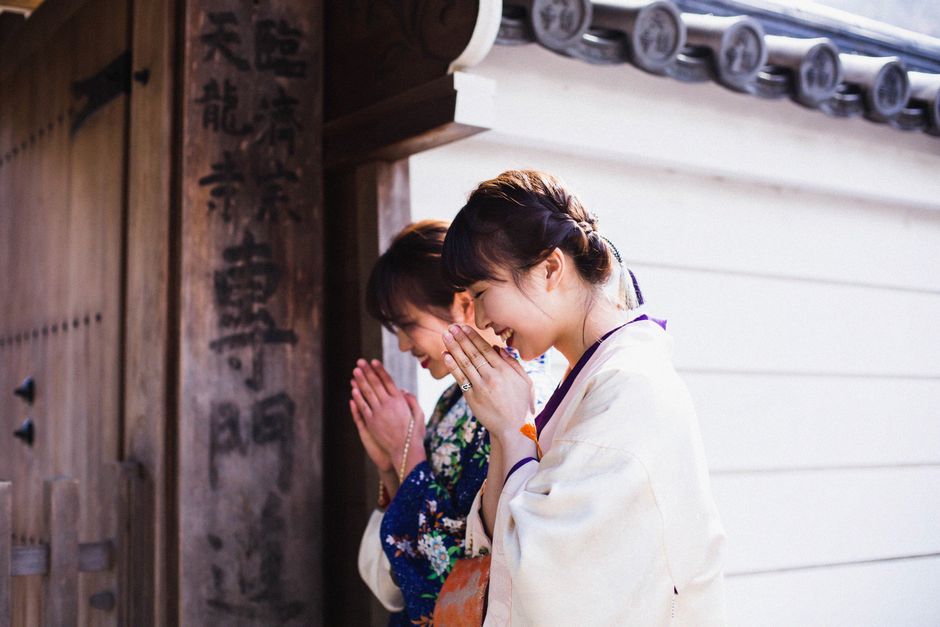
When visiting shrines and temples, specific protocols apply. Before entering the sacred area, one may notice a water pavilion (chozuya) where a ritual cleansing of the hands and mouth is performed. The procedure involves using a ladle to pour water over the left hand, then the right hand, and finally rinsing the mouth by pouring water into a cupped hand—never directly from the ladle. At Shinto shrines, the common practice is to bow twice, clap twice, make a silent wish, and then bow once more. At Buddhist temples, clapping is generally omitted, and a simple bow or a quiet prayer is sufficient.
Footwear is another area where awareness matters. In many traditional inns (ryokan), temples, and some restaurants, shoes are removed at the entrance. Slippers may be provided for indoor use, but these are often changed when entering a tatami room or a restroom. Walking on tatami with outdoor shoes or with slippers meant for other areas is considered unhygienic and disrespectful. Observing what others do with their shoes can prevent awkward moments.
Communication and Social Interaction
Japanese communication tends to be indirect and context-dependent. Rather than saying “no” directly, people may use phrases like “chotto muzukashii” (a little difficult) or pause thoughtfully to indicate disagreement. Pushing for a definitive answer too forcefully can create discomfort. Similarly, silence during a conversation is not necessarily a sign of disinterest; it can be a moment of reflection or a way to show respect for what was said.
Personal space is generally wider than in many Western countries. Physical contact such as hugging or patting someone on the back in public is uncommon, especially with acquaintances. A slight bow or a nod is a safer way to express friendliness. Compliments are often received with a humble response rather than a direct “thank you,” to avoid appearing boastful. For example, if complimented on one’s language ability, a typical reply might be “Iie, mada mada desu” (No, I still have a long way to go).
Business card exchange, known as meishi kōkan, follows a precise ritual: cards are presented with both hands, with the text facing the recipient. Receiving a card should be done with both hands, and it should be studied briefly before being placed carefully on the table or in a card case. Writing on someone’s card or putting it in a pocket without looking at it is considered disrespectful. Overall, the key is to approach each interaction with attentiveness and a willingness to adapt to the social cues present.